The landscape for university research and corporate partnerships is undergoing a seismic shift. As traditional government funding models for scientific research face new pressures, university leaders are increasingly looking to industry to fill the gap. But this is not the corporate philanthropy of old. Today’s partnerships are strategic, multifaceted, and tied directly to business goals—moving beyond simple “gifts” to agreements that include specific clauses on research outcomes and licensing.
Institutions that embrace this change are thriving. Georgia Tech, for example, has become a “model for the 21st century university” by securing nearly 15% of its research funding from industry, more than double the national average of 6%. Their success offers a new playbook for leaders in corporate engagement, research administration, and technology transfer. The core lesson: stop thinking project by project and start building holistic, long-term relationships.
The High Cost of a Siloed Campus
Before universities can build these comprehensive partnerships, they must confront a critical internal challenge: fragmentation. Many institutions operate with islands of disconnected systems and data.
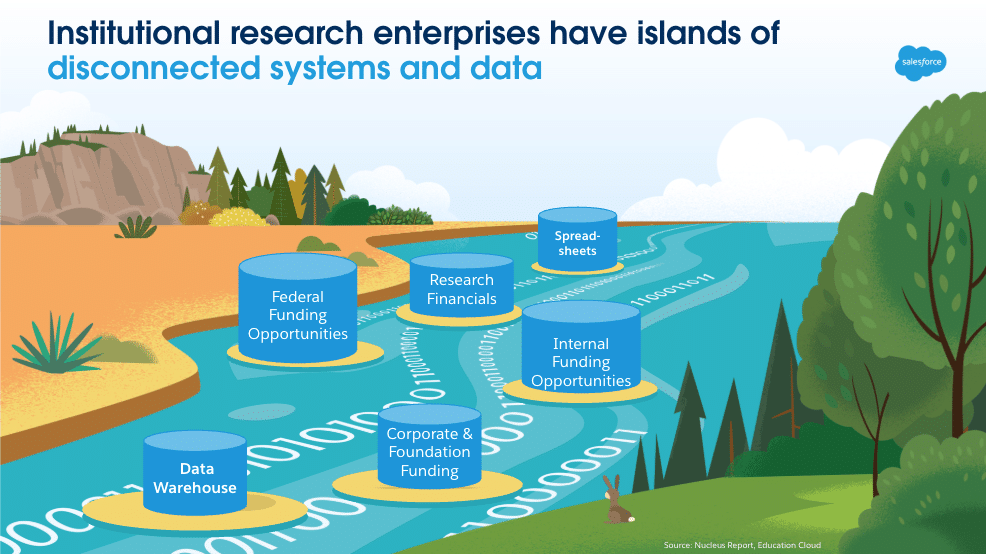
This fragmentation creates pain points for everyone:
- A Confusing External Experience: From the College of Engineering, College of Business, the University Foundation, or the Research Institute, Corporations often face many points of entry when trying to engage with a university. An inquiry to the College of Engineering may yield an answer siloed within that college, missing broader opportunities for collaboration across the institution, like the School of Medicine.
- An Incomplete Internal View: Critical relationship data is often scattered across spreadsheets, Outlook, and other disparate systems, making a unified view impossible. With many universities having 20 or more data silos, they are prevented from truly understanding a corporation’s total impact. This means a company can be highly active on campus without making a significant financial investment, and no one has the complete picture to change that.
Inefficient Operations: Relationship managers find themselves bogged down with administrative tasks instead of focusing on strategic initiatives. The lack of a central system for tracking relationships across departments leads to duplicated efforts and missed opportunities for collaboration.
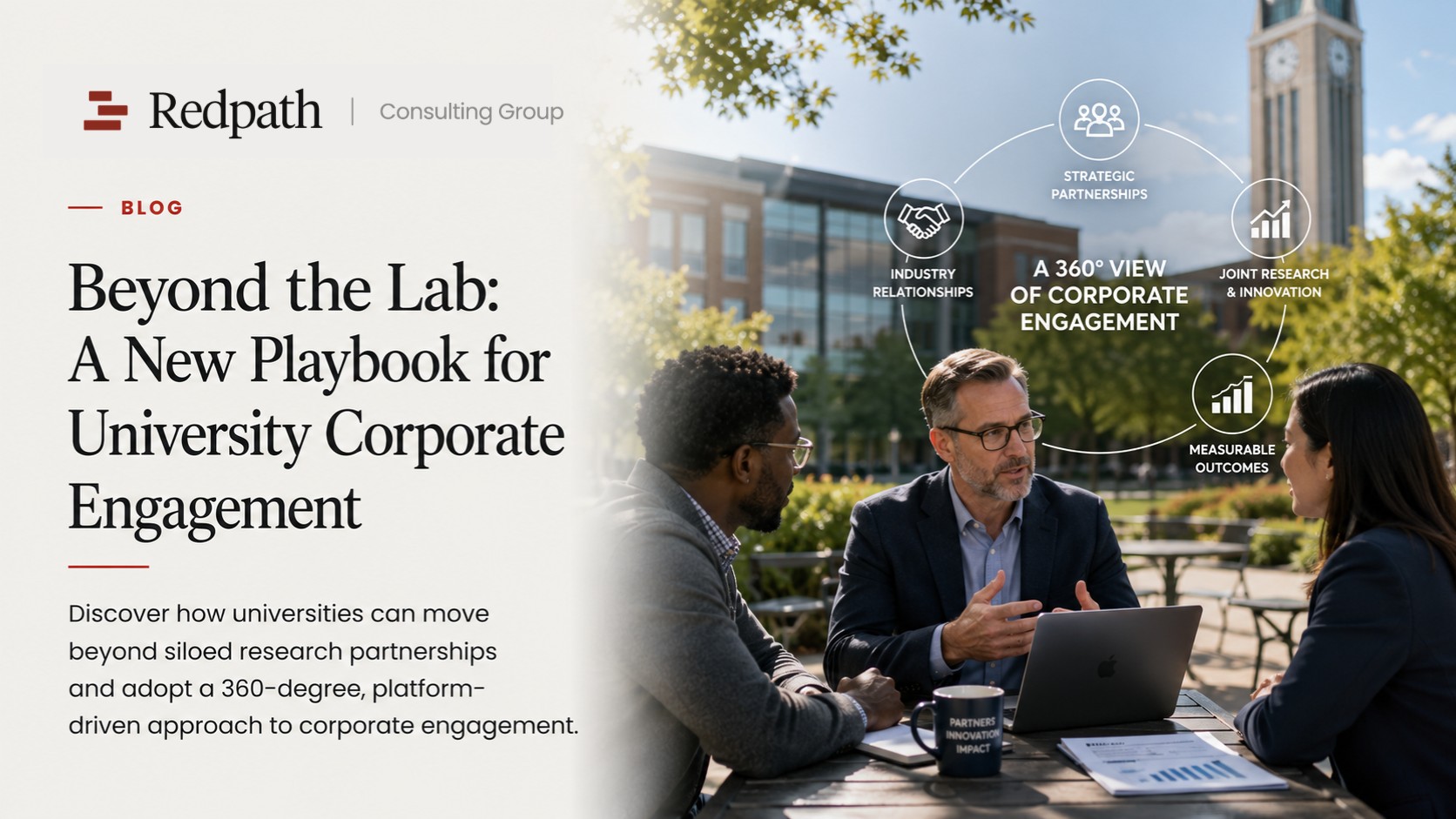
The New Strategy: A 360-Degree View of Partnership
The most successful universities are breaking down these silos by adopting a holistic engagement strategy. Successful universities are thinking big when they engage a potential corporate partner by sharing every way their university could possibly engage with them.
This means looking beyond a single research project to see the full spectrum of potential engagement, including:
- Research and development collaborations
- Technology transfer and licensing agreements
- Athletics and naming rights
- Executive education and employee upskilling
- Student recruitment and talent pipelines
- Fee-based utilization of labs and equipment
By avoiding a fractured and disjointed approach in partnerships Universities have an opportunity to maximize partnerships from a single meaningful engagement to multiple, creating a true strategic partnership that drives mutual value and supports the academic mission of the institution.
Why a Platform Approach is Essential for Today’s University
Executing a holistic strategy is impossible with siloed technology. While point solutions like Wellspring or Inteum offer excellent, specialized tools for technology transfer and IP management, they are designed to serve a specific office. By their nature, they can reinforce the very departmental silos that modern universities must dismantle. The challenge of corporate engagement today is not a single-department issue; it’s an enterprise-wide opportunity that demands an enterprise-wide platform.
This is where a comprehensive system like Salesforce becomes a strategic asset. Salesforce provides a “single source of truth” that can unify the entire campus, enabling the 360-degree approach that today’s environment demands.
Here’s how a platform approach is poised to meet the moment:
- Unify All Engagement Data: Salesforce allows universities to track companies, faculty, and projects in one place, creating a complete view of every interaction. This breaks down data silos between research, tech transfer, corporate relations, and philanthropy, allowing you to see the “big dollars” in every type of engagement.
- Connect the Entire Research Lifecycle: A platform can manage the full journey, from finding and applying for grants to managing compliance and communicating impact, all in one connected system. This creates a seamless experience for researchers and administrators alike.
- Drive Strategy with AI and Analytics: University leaders need strategic insights, not just data. With Salesforce, you can build powerful dashboards to track KPIs, surface trends, and monitor your entire opportunity pipeline. Combining historical data with AI can even predict the probability of winning grants, ensuring leaders prioritize the best funding opportunities to maximize impact and win rates.
- Automate for Efficiency: By automating workflows, tasks, and even communications, a platform frees up relationship managers from administrative burdens so they can focus on building strategic partnerships.
Your Partner in Transformation
Embarking on this kind of digital transformation requires a partner with deep expertise in higher education. Redpath Consulting Group has been serving education customers since 2008, taking an outcomes-focused approach to ensure every implementation is scalable, sustainable, and aligned with your strategic goals. Our work with institutions like the University at Buffalo, which achieved a 360-degree solution for its research and partnerships, demonstrates the power of a unified approach.
To thrive, universities must move beyond siloed operations and embrace a connected, campus-wide strategy for corporate engagement. By leveraging a unifying platform and an experienced partner, you can double the scale and amplify the impact of your research, driving innovation and growth for years to come.